
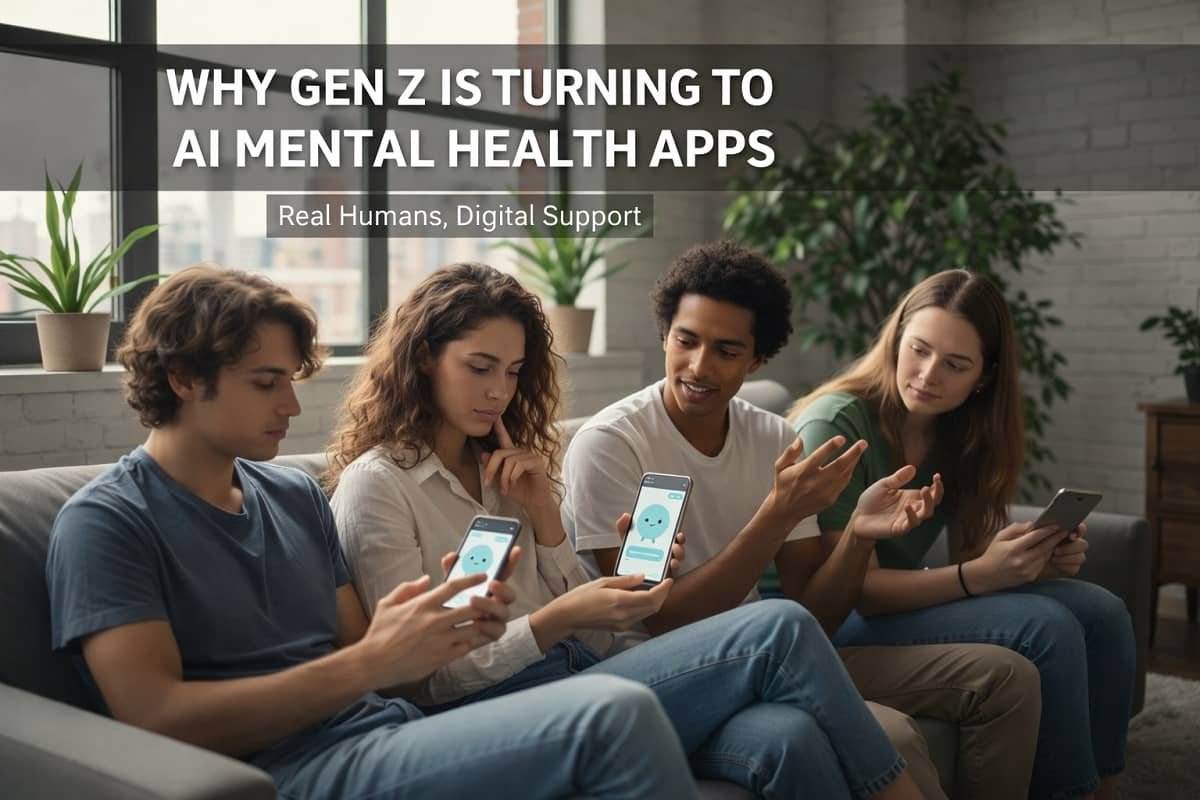
Mental health has become a defining issue for Generation Z, a cohort born into a world of rapid technological change, economic uncertainty, and constant digital connectivity. Unlike previous generations, Gen Z is more open about discussing mental health challenges such as anxiety, depression, burnout, and emotional fatigue. However, openness alone has not solved the problem. Access to timely, affordable, and stigma-free mental health care remains limited. In response, AI-powered mental health apps have gained widespread adoption among Gen Z, reshaping how young people seek emotional support and manage their well-being.
This shift is not merely a technological trend. It reflects deeper social, psychological, and cultural changes in how mental health is perceived and addressed. AI mental health apps align closely with Gen Z’s values of accessibility, personalization, privacy, and immediacy, making them a natural extension of everyday digital life.
Gen Z and the Growing Mental Health Crisis
Research consistently shows that Gen Z reports higher levels of psychological distress compared to older generations. According to data frequently cited by psychological associations and public health surveys, over 40 percent of Gen Z respondents report persistent feelings of sadness or hopelessness, while more than one-third experience anxiety that interferes with daily functioning. These figures are significantly higher than those reported by Millennials or Gen X at comparable ages.
Several factors contribute to this trend. Gen Z has grown up amid global instability, including economic recessions, pandemics, climate anxiety, and geopolitical uncertainty. Academic pressure has intensified, with increased competition and expectations to excel from an early age. At the same time, career paths have become less predictable, creating chronic uncertainty about the future.
Social media plays a central role in shaping Gen Z’s mental health experience. While digital platforms enable connection and self-expression, they also amplify comparison, validation-seeking, and fear of missing out. Constant exposure to curated online identities can distort self-perception and intensify feelings of inadequacy. As a result, Gen Z faces a unique combination of hyperconnectivity and emotional isolation.
Unique Mental Health Challenges Faced by Gen Z
One of the key reasons Gen Z is turning to AI mental health apps lies in the unique challenges they face. Academic and career-related stress begins early, with constant pressure to perform, upskill, and compete in an uncertain economy. Unlike previous generations that followed relatively linear career paths, Gen Z is navigating freelance work, gig economies, and rapidly changing job requirements, all of which contribute to anxiety and self-doubt.
Social media further intensifies these challenges. Platforms built around likes, shares, and followers subtly encourage comparison. Seeing curated versions of other people’s lives can distort reality and create feelings of inadequacy. Even positive interactions can become emotionally draining when self-worth becomes tied to online validation. Despite being digitally fluent, many Gen Z individuals struggle with real-world communication, vulnerability, and emotional regulation.
Loneliness is another major issue. While Gen Z is constantly connected through screens, meaningful emotional connection can feel scarce. Many young people hesitate to burden friends or family with their problems, fearing judgment or misunderstanding. AI mental health apps offer a space where emotions can be expressed freely, without social consequences.
Barriers to Traditional Mental Health Support
Despite heightened awareness, many Gen Z individuals struggle to access traditional mental health services. Cost remains one of the most significant barriers. In many regions, a single therapy session can cost more than what a student or early-career professional can afford on a regular basis. Studies in mental health access consistently show that young adults delay or avoid therapy due to financial constraints.
Availability is another major challenge. Long waiting periods for counseling services are common, particularly in public healthcare systems and university counseling centers. Waiting times of four to eight weeks for an initial appointment are frequently reported, while rural or underserved areas may lack mental health professionals altogether.
Stigma, though reduced, has not disappeared. Many Gen Z individuals fear being judged, misunderstood, or labeled for seeking professional help. Others find it difficult to articulate their emotions in face-to-face settings, especially during early stages of distress. These barriers have created a gap between mental health awareness and actual care, a gap that AI mental health apps increasingly fill.
What Are AI Mental Health Apps?
AI mental health apps are digital platforms that use artificial intelligence technologies such as machine learning, natural language processing, and sentiment analysis to support emotional well-being. These apps interact with users through text-based chat, voice input, mood tracking, or behavioral analysis. Over time, AI systems learn from user interactions to provide more personalized responses and recommendations.
Common features include AI chatbots trained in evidence-based techniques such as cognitive behavioral therapy, guided meditation and breathing exercises, mood journals, stress management tools, and self-reflection prompts. Some apps integrate with wearable devices to track sleep, physical activity, and physiological indicators related to mental health.
For Gen Z, these tools feel intuitive and non-intimidating. They resemble the messaging apps and digital platforms already embedded in daily life, reducing friction and encouraging consistent use.
The Appeal of 24/7 Emotional Availability
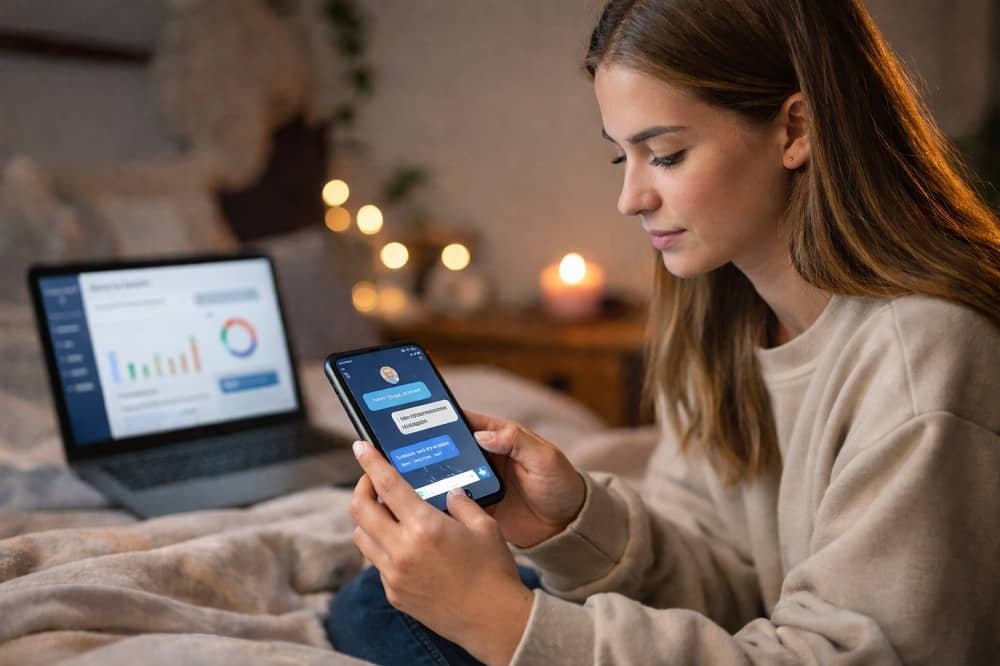
One of the strongest reasons Gen Z turns to AI mental health apps is constant accessibility. Emotional distress rarely follows a schedule. Anxiety, overthinking, and loneliness often peak late at night, when traditional support systems are unavailable. Usage data from mental health apps shows that a significant portion of engagement occurs during late evening and early morning hours.
AI mental health apps offer immediate responses during these moments. While they do not replace emergency care, they can provide grounding exercises, calming conversations, or simply a sense of being heard. For many Gen Z users, knowing that support is always available reduces feelings of isolation and emotional overwhelm.
This immediacy aligns with Gen Z’s expectations of technology. In a world of instant messaging and on-demand services, delayed mental health support feels increasingly incompatible with real emotional needs.
Privacy, Anonymity, and Emotional Safety
Privacy is a critical factor driving adoption among Gen Z. Young people are highly conscious of their digital footprints and cautious about sharing sensitive information publicly. AI mental health apps allow users to express emotions anonymously, without fear of social judgment or long-term consequences.
The absence of human judgment plays a key role in emotional openness. Users can discuss fears, intrusive thoughts, and vulnerabilities they might hesitate to share with friends, family, or professionals. Research on digital mental health engagement suggests that anonymity significantly increases honesty and self-disclosure, which are essential for emotional processing.
Leading apps have responded to privacy concerns by implementing encryption, anonymized data storage, and transparent data policies. Gen Z users tend to trust platforms that clearly communicate what data is collected and how it is used, reinforcing the importance of ethical design.
Real-World Examples of AI Mental Health Apps
The popularity of AI mental health apps among Gen Z is supported by real-world adoption data. Platforms such as Woebot, Wysa, and Youper have collectively reached millions of users globally, with a substantial proportion under the age of 30. These apps use conversational AI trained in therapeutic frameworks to help users manage anxiety, depression, and stress.
Woebot, for example, has been associated with peer-reviewed studies indicating reductions in anxiety and depressive symptoms after a few weeks of consistent use. Users frequently report that the chatbot’s conversational tone makes it easier to engage with mental health exercises without feeling overwhelmed.
Wysa has been adopted by educational institutions and workplaces to support large populations where human counselors are limited. Its success illustrates how AI mental health tools are increasingly recognized as scalable, supportive solutions rather than experimental technologies.
Case Study: University Students and AI Mental Health Support
University students represent one of the largest Gen Z user groups for AI mental health apps. Counseling centers worldwide have reported unprecedented demand, often exceeding available resources. In response, several institutions have integrated AI-based mental health apps into their student support systems.
Feedback from students indicates that many feel more comfortable initiating mental health conversations through an app rather than face-to-face counseling. For some, the app serves as a first step, helping them recognize emotional patterns and decide whether to seek professional help. This demonstrates how AI mental health apps complement traditional services by reducing barriers to entry and encouraging early intervention.
Personalization and Adaptive Care
Personalization is central to Gen Z’s engagement with AI mental health apps. Unlike static self-help content, AI systems adapt based on user behavior, emotional trends, and feedback. Over time, the app learns when a user is most vulnerable, what coping strategies are effective, and how to adjust its responses accordingly.
Research in digital health consistently shows that personalized interventions lead to higher engagement and better outcomes. Gen Z users often report feeling “understood” by apps that remember previous conversations and tailor suggestions to individual needs. This perceived understanding strengthens emotional connection and long-term use.
Affordability and Global Accessibility
Compared to traditional therapy, AI mental health apps are significantly more affordable. Many offer free basic features, with premium subscriptions costing a fraction of regular therapy sessions. This affordability is particularly important for students, unemployed individuals, and young professionals.
AI apps also address geographic and cultural barriers. Multilingual support and culturally adaptable content allow these platforms to reach users in regions where mental health services are scarce or stigmatized. For many Gen Z individuals globally, AI mental health apps are not a supplement but the primary form of mental health support available.
Ethical Concerns and Limitations
Despite their benefits, AI mental health apps raise important ethical questions. Data privacy, algorithmic bias, and the limits of AI understanding are ongoing concerns. Emotional data is highly sensitive, and misuse could have serious consequences. Gen Z users are increasingly vocal about the need for transparency and accountability.
There are also limitations to what AI can provide. Complex trauma, severe mental illness, and crisis situations require human expertise. Most reputable apps clearly state that they are not a replacement for professional care and encourage users to seek help when symptoms escalate.
The Future of AI Mental Health for Gen Z
Looking ahead, AI mental health apps are likely to become more integrated into daily life. Advances in voice analysis, wearable technology, and predictive analytics may enable earlier detection of emotional distress. Hybrid models that combine AI tools with human therapists could offer more comprehensive and scalable care.
For Gen Z, mental health is not a secondary concern but a core aspect of overall well-being. AI mental health apps align with their expectations of technology as supportive, personalized, and accessible.
Conclusion
Gen Z’s turn toward AI mental health apps reflects a broader transformation in mental health care. Faced with rising psychological distress and limited access to traditional services, Gen Z has embraced AI as a practical, non-judgmental, and affordable form of support. Backed by growing usage data, real-world adoption, and emerging research, AI mental health apps are redefining how young people engage with emotional well-being.
While challenges around ethics, privacy, and clinical limitations remain, these apps represent an important step toward more inclusive, proactive, and accessible mental health care. For Gen Z, AI mental health apps are not a replacement for human connection, but a meaningful companion in navigating an increasingly complex emotional world.